Sunday, 18 October 2015

MacMansions on exhibition


Australia is represented at the Chicago Architecture Biennial by two young architectural collaborations, each stressing their research-based exploration of alternative practices.  Of particular interest to me is the project by David Neustein and Grace Mortlock, founders of Sydney-based otherothers. 

The opening review by Curbed.com goes to the heart of the problem, even while it oversimplifies the project:

"Turns out, America isn't the only place with a glut of over-sized suburban homes. Australians actually have the largest average home size in the world, which may explain why it took an Australian practice, otherothers, to create such an elegant solution to extraneous space. By building a covered courtyard within the frame of the home, the house-within-a-house concept downsizes in an intelligent way, reducing costs while adding new types of outdoor space."

Thursday, 1 October 2015

Glass adventures

My admiration for glass as a material increases daily.  Which is not to say that I think all applications of this extraordinary material are equally virtuous.  But then again, virtue has never been enough to define good architecture.  Heightened emotion might be closer to the mark, and glass has a great way to create some pretty extreme emotions. 

Apparently death-defying transparent floors at great heights are not altogether new.  But I have to say this one, on a slender suspension bridge in China, makes more sense, than most.

Brought to you by inhabitat.com,with a text reflecting their usual casual approach to technical detail, the picture gallery is enough to suggest the awe inspiring thrill that the original timber planked bridges must have inspired in generations of tourist pilgrims.

My previous post about glass was the proposed swimming pool spanning some 25m between luxury apartment blocks at Embassy Gardens in London.  It interests me to speculate why I feel so strongly that there is an ethical as well as aesthetic comparison to be made between the two projects.  Yet the contrast comes sharply to mind, in spite of the fact that I made a case for some virtue in the London project.

The London pool is an impressive but perverse piece of material engineering.  But it is fair to ask: Why hold up many tons of water in mid air, for a haptic experience probably indistinguishable from an infinity edge pool conventionally supported?  And let's face it, the pool is only a rendering at the moment, promoting a developer's real estate sales.

In contrast, the Chinese suspension bridge is an elegant technical response to context and history, and guaranteed to maintain the thrill for the entire journey.  It ticks the boxes for a great use of glass in architecture.


Sunday, 23 August 2015

Big things in the sky 2

Sky pool.  Sounds like an oxymoron, holding well over 600 tons of water up in the sky, especially when it's suggested that it will be done without a visible structure.

It is tempting to believe that floating a pool in the air is just a sales gimmick given life by photorealistic computer rendering, and that it won't be there when the building is actually built.  But since Jean Nouvel managed to disguise a cantilevered pleasure garden as a heliostat, I'm ready to believe that this latest fairytale is the genuine expression of a megalomaniac developer's fantasy.  A kind view in the Guardian quotes Sean Mulryan, of Irish developer Ballymore:
“My vision for the sky pool stemmed from a desire to push the boundaries in the capability of construction and engineering . . . I wanted to do something that had never been done before.” 
I can sympathise with that.  Without that kind of hubris, we wouldn't have had the Eiffel Tower, or for that matter, Neil Armstrong landing on the moon.  Here, the 25-metre-long pool will be completely “structure free” and made of 20cm thick glass sheets, a proposition given credence only because it is  designed by engineering giant Arup Associates with Eckersley O’Callaghan, plus aquarium specialists Reynolds.

But my suspension of disbelief is tempered by the pragmatism of Henry Pryor, a buying agent for wealthy clients.  Pryor is reported as suggesting the plans for the pool were “genuinely crackers” and wondered “are there enough exhibitionists to fill it?”  “It’s not easy to say for sure what the extras like pools, tennis courts and home cinemas add to a home,” he told the Guardian. “But for the first time I can honestly say that, while my admiration for the architect is close to reverence, this absurd addition must surely be the biggest mistake I have ever come across.”

That said, the substance of what this apparently absurd gesture is about is the real thrust of the article in the Guardian:
For the overseas investor who has it all, what better trophy to add to the portfolio of properties you will never visit than an apartment with its own 'sky pool'?
The article describes not only the £1bn Embassy Gardens scheme where views of the new US Embassy from the pool are trumpeted as a key selling point – the Guardian asks why you would want to suspend an all-glass bridge beside a building that believes itself to be at such risk of a terror attack that it cowers behind a 30-metre-deep bomb-blast zone?   It goes on to list a series of other London projects with variations on the same theme.

Oh well, advertising in the sky was always effective, be it  a vertical forest as an apology for the real forests we have cut down, a compensation for the sunshine we have cut out, or for ostentatious wealth.  For architects and engineers it does bring a little excitement to their lives.


Read:

Sunday, 9 August 2015

Glass is dead, long live glass!


Once again, someone takes a pot shot at glass as the great Satan in building energy efficiency, and once again the glass industry huffs and puffs that there is more to architecture than living in an insulated box.  The two articles are worth reading.

Saturday, 2 May 2015

Anything but superficial

A portrait of failed criticism


Under that clever title, Architects Without Frontiers chief Andrew Mackenzie reviews recent commentary in  ArchitectureAU, on ARM Architecture's Portrait building in Melbourne, Australia.  He finds the critical discourse 'marred by racial profiling, pedantry and unsubstantiated opinion'.  And I have to agree with him.

As often happens, the best thing I can do is point you at MacKenzie's excellent and readable article.  Click here to access.

But it's worth adding a little more information not highlighted in MacKenzie's piece.

Saturday, 18 April 2015

Voodoo heliostats

Oh, the magic of the big architectural gesture!!! 

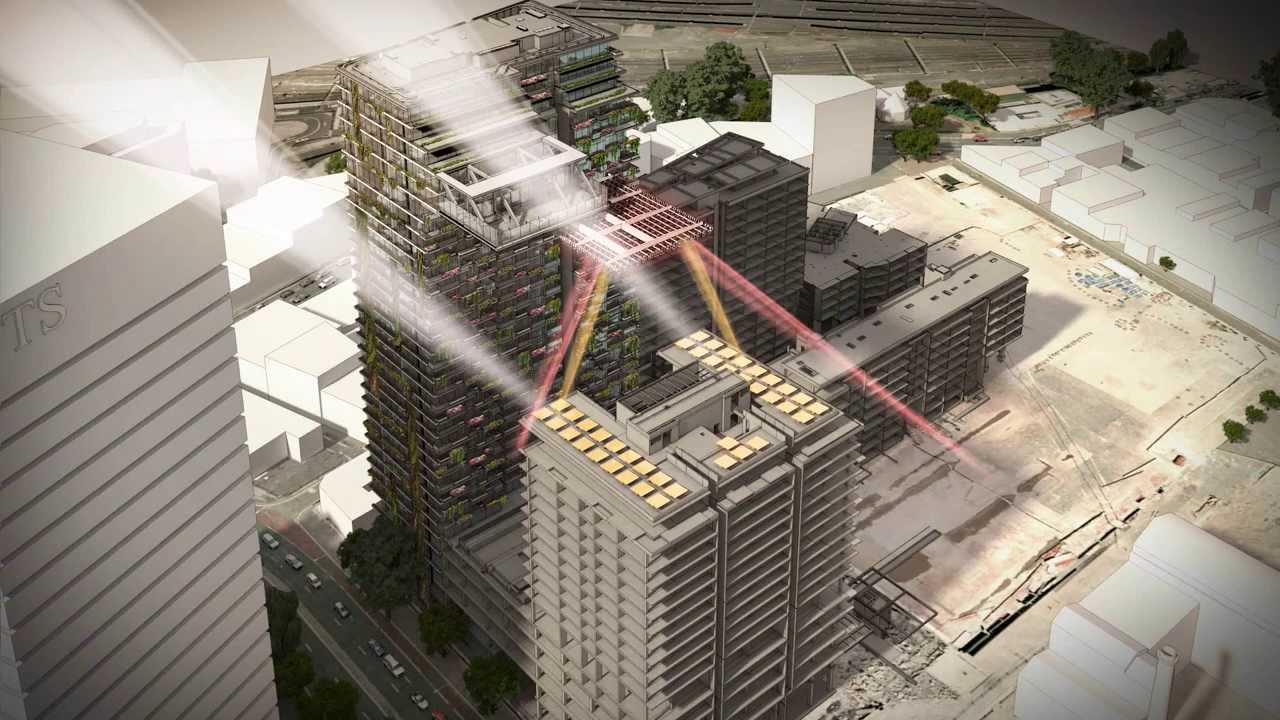
By far the most read of my blog posts are those about Nouvel's iconic carbuncle on the face of One Central Park, here in Sydney.  It is clear that there are a lot of people interested in that big and mysterious heliostat.

But what really amuses me is that it seems to have raised expectations more broadly.  Quite clearly, some people think that such technical gymnastics will also solve otherwise impossible architectural or urban design problems elsewhere.

Sunday, 22 March 2015

The most sustainable building is an existing one

Nothing new in this post.  I just can't help myself; I am becoming more and more committed to driving home this particular message. I sincerely believe that the principle holds, regardless of what else might come into play, if we truly strive for a sustainable built environment.

For sake of simplicity, let's get the definitions right.

Monday, 16 March 2015

Real parametrics


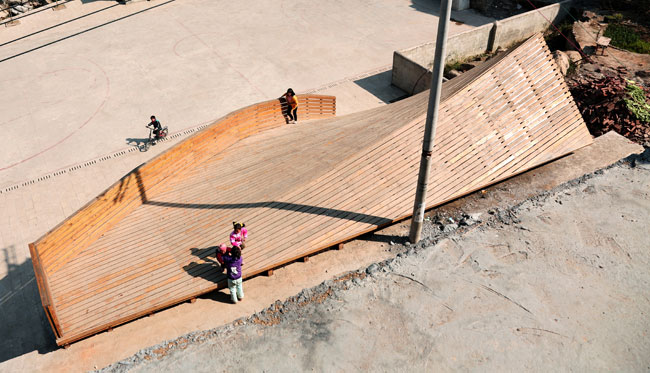
Sometimes you come across a project that re-establishes your faith in the purpose of architecture, while it also accommodates the architects' in-group preoccupation with interesting forms which dominates the mainstream literature. This little project is one of those classic NGO interventions – in a place where almost anything is valued, but where something good adds immeasurably more value. 

Friday, 13 February 2015

Biased critic


My post on Gehry's Sydney building prompted some off-line correspondence.  That discussion inevitably involved comparison between the 'starchitects' and their apparent disregard for the usual constraints to which the rest of us have to pay attention....like cost, or durability of external finishes.


It highlighted that I find myself in a very strange frame of mind in relation to these various 'starchitects'.  Because they are all so bloody talented at something, it is all the more offensive how cavalier most of them are. 

Saturday, 7 February 2015

Rational Gerhy, rational critics


The paper bag opens


With much brouhaha, in the presence of the celebrated architect, Sydney's one and only Frank Gehry building was opened  this last week. And the opening was accompanied by the same vehement, self-serving misinformation that has been dished up about it during its construction. It's the building that people love to hate, but they are too lazy to really think about.

Typical was the rant by Elizabeth Farrelly, Sydney's resident public intellectual architecture critic. Before I quote her, let me be quite clear: I am really pleased that Farrelly can survive by her writing, and she has every right to a fairly held opinion. I am even more pleased that Gehry's building prompts Sydney people to be interested in architecture, and to debate it. So what does Farrelly have to say?  First ad hominem, attack the man:
"Frank Gehry is the Kim Kardashian of contemporary architecture: all curves, no content."