Showing posts with label LEED. Show all posts

Sunday, 22 March 2015

The most sustainable building is an existing one

Nothing new in this post.  I just can't help myself; I am becoming more and more committed to driving home this particular message. I sincerely believe that the principle holds, regardless of what else might come into play, if we truly strive for a sustainable built environment.

For sake of simplicity, let's get the definitions right.

Monday, 10 June 2013

The greenest building is the one already built

Carl Elefante, an American architect, deserves the credit for introducing the phrase "The Greenest Building is the One Already Built." He appears to have framed it in the context of the seminal paper by the Advisory Council On Historic Preservation Assessing the Energy Conservation Benefits of Historic Preservation: Methods and Examples dating from 1979, which succinctly stated:
"Preservation saves energy by taking advantage of the nonrecoverable energy embodied in an existing building and extending the use of it."
Elefante brought the principle thoroughly up-to-date, and placed in the wider sustainability context in his eponymous 2007 paper in the Journal of the National Trust for Historic Preservation.

So it struck me forcefully that when recently the American Institute of Architects announced its selection of the Greenest Buildings of 2013, only one is the reworking of an existing building.  The 355 11th Street: the Matarozzi/Pelsinger Multiuse Building by Aidlin Darling Design is a LEED-NC Gold adaptive re-use of a historic and previously derelict turn-of-the-century industrial building in San Francisco, and to my mind equal to or better than any of the other projects by any normal criteria for architectural excellence.

That it is possible to do better, and what's more to do it within the architectural mainstream, was best illustrated for me some years ago when in the 2008 New South Wales State architecture awards here in Australia, of the 42 premiated projects fully a half were of adaptive reuse – and those adaptive reuse buildings comprehensively dominated the top prizes. The particular year, and the singular location in a far flung corner of the world is significant only in that at the time I happened to be preparing for a keynote address to the Architectural Institute of Korea, and that they had asked me to throw some light on the conspicuous success of Australian architects working internationally in the region. Part of my explanation was that Australian firms piched for work with stronger than usual sustainability credentials, and that those awards were the embodiment of the complex factors in Australian architectural education and practice from which such skill sets derived.

Which leaves the dangling question: why this bias for new build in the American conception of the best examples of current sustainability practice?  I don't want to offend the conscientious architects and other consultants, who were either the authors of the chosen project, or the members of the American Institute of Architects Committee on the Environment (AIA COTE), who wrestled with the choices.  They say that: "What stands out this year is that it wasn’t just green building technology that put these buildings on the list, but the community impact of specific buildings......This year's winners displayed a holistic excellence that encompassed much more than just the technical aspects of green building."
To my mind, despite the lofty claim, the listed projects are on the whole, still a variable grab-bag of all the usual strategies for making buildings less worse, rather than even vaguely sustainable.  I can only suggest that it is a confirmation of the systematic distortion of priorities driven by the current use of rating schemes, such as the US Green Building Council's LEED certification.  Chasing the stars swamps other, more thoughtful and more rigorous approaches, to the point that it perverts the very meaning of 'sustainable'.
Doing something with our existing buildings remains the most pressing, but also probably the most fruitful approach to improving the sustainability of the built environment. 

Saturday, 23 March 2013

Surprise. Surprise. Mandatory disclosure in New York

Sometimes it takes me a while to catch up with something quite important.  And to be completely truthful, I wouldn't have caught up with this one, but for an item in GreenBuildingsAlive, a fine, 'long-form writing' blog I don't read nearly as much as it deserves.

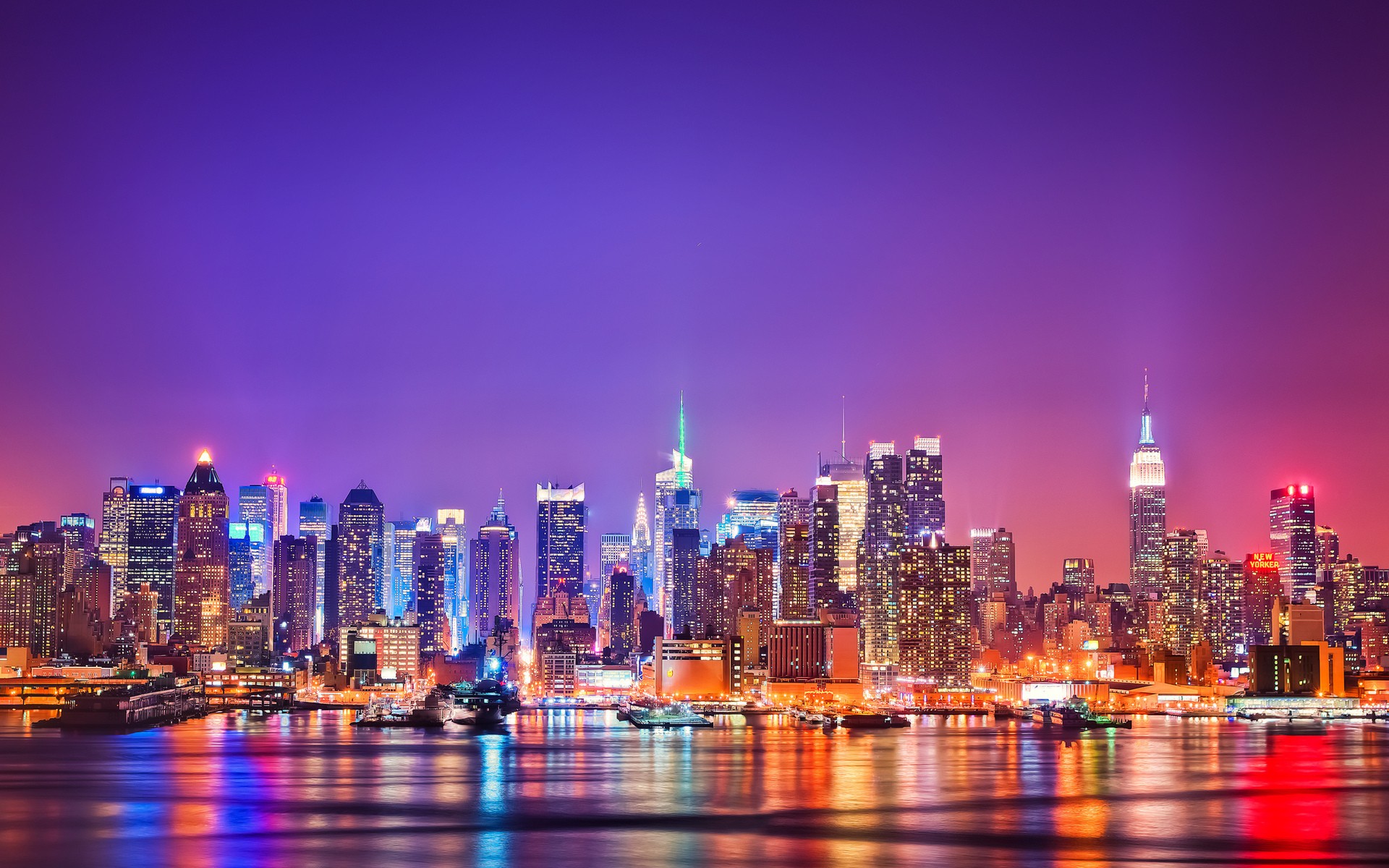
Late last year, the New York Times carried an article on the results of the first mandatory disclosure of energy efficiency scores for commercial buildings.  It had a few surprises.  Chief amongst them were the unflattering comparisons between some newer buildings that have trumpeted high LEED ratings, and older buildings.
"In courting tenants over the last six years, 7 World Trade Center has trumpeted its gold LEED rating, an emblem of sound environmental citizenship.  But when it comes to energy efficiency, the young 52-story tower . . . had a score of 74 — just below the minimum of 75 set for high-efficiency buildings by the federal Environmental Protection Agency’s Energy Star program.

On the other hand, two venerated show horses from the 1930s, the Chrysler Building and the Empire State Building, sailed to an 84 and an 80 as a result of extensive upgrades of their insulation and mechanical systems."
Of course, the situation overall is much more complex, and the article makes a remarkably good job of explaining this complexity.  Reporting the more obvious explanations, like:
"Older buildings tend to have higher Energy Star scores because they have thicker walls, fewer windows and less ventilation — superior “thermal envelopes,” as a report on the early results puts it. They are also less suited to energy-gobbling activities like computer data crunching, the downfall of some youthful but middling performers."
the discussion moves on to the more subtle policy purpose of identifying buildings with the most opportunity to improve.  As the article points out:
"The stakes are considerable. Unlike cities that depend heavily on automobiles, New York racks up most of its carbon dioxide emissions — nearly 80 percent — in heating and cooling buildings. Tracking this energy use is deemed crucial to meeting the city goal of cutting overall emissions by about a third by 2030, to slash costs and fight climate change. "
 And there lies one of the less well exposed, or perhaps poorly cross-referenced details in an otherwise well informed commentary.  However admirable a 2009 law requiring progressive adoption of mandatory disclosure, however sound the approach to market transformation, cutting emissions by 30%  is actually a bit of a cop-out.  I say this not as some sort of intemperate judgmental rant, but simply to point out that the 2030 Challenge to which so many city mayors in the US have subscribed, sets far more ambitious goals.  Still, you have to begin somewhere, and proper, public disclosure, with a suitably reported detailed analysis which does not allow simplistic interpretation, is definitely a good place.

To me as an architect of a certain generation, there are other perhaps predictable, but still shocking factoids, mentioned in passing.  My favourite?  On a scale topping out at 100, "the Seagram Building, Mies van der Rohe’s bronze-toned 1958 masterpiece on Park Avenue, posted a 3."  I shouldn't be surprised.

Read the NY Times article here.
And if you are up to it,download the whole 36 page NEW YORK CITY LOCAL LAW 84 BENCHMARKING REPORT in PDF format here.